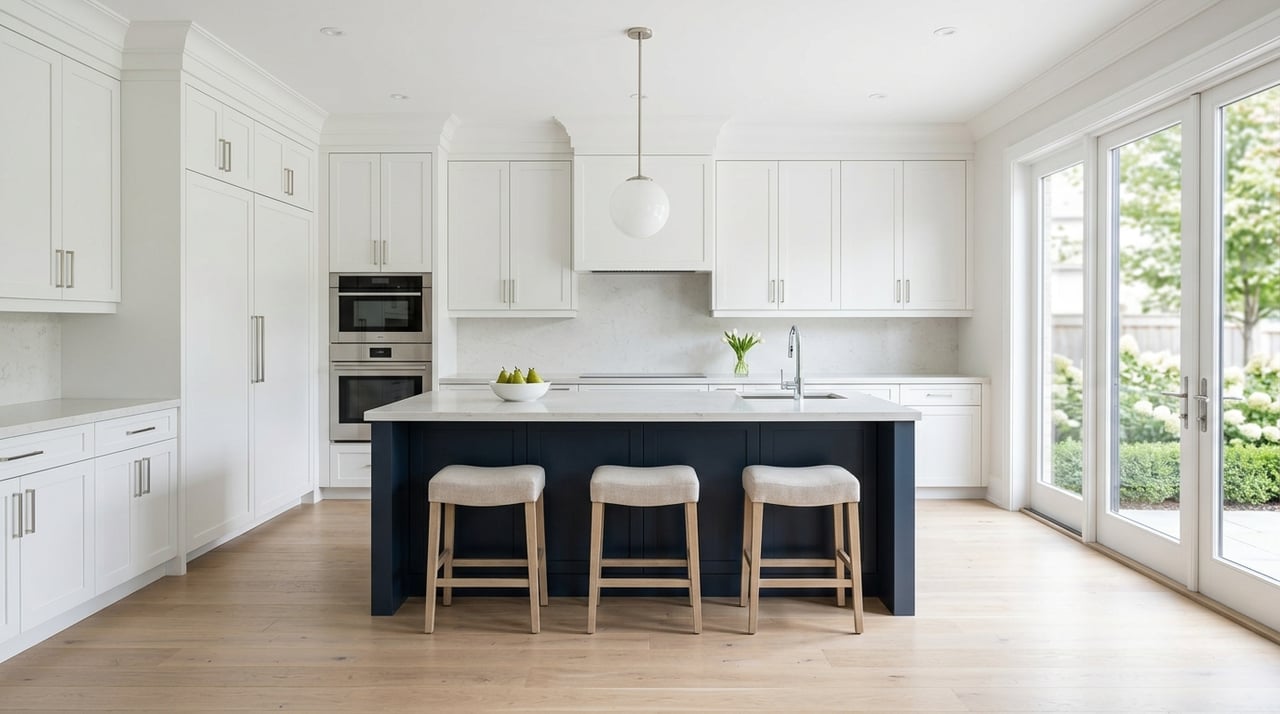
Should You Update Before Selling Your Bloomfield Hills Home?
Before you renovate, figure out what buyers will actually value—and what may simply cost you money.
Quick Answer
If you're preparing to sell your Bloomfield Hills home, you probably don't need to renovate everything buyers might consider dated.
In many cases, repairs, thoughtful styling, better lighting, fresh paint and a few strategic updates can do more for your sale than a major renovation.
The question isn't simply, What could I update?
It's what should I update—and what should I leave alone?
The Complete Picture: Do You Really Need to Renovate Before Selling?
If you're getting ready to sell your Bloomfield Hills home, there's a good chance you've started looking around and thinking:
Do I need to update this before I sell?
Maybe it's the kitchen. The bathroom. The paint. The lighting. Or the room you've been meaning to redo for the last ten years.
Here's the part sellers sometimes overlook:
The things you would change aren't necessarily the things a buyer needs you to change.
Before you start renovating, it's worth figuring out what will actually help your home sell—and what may simply cost you money.
What Does the Bloomfield Hills Market Suggest?
Bloomfield Hills is an established, high-value market, which means buyers often pay close attention to condition, presentation and overall feel.
According to Census Reporter's Bloomfield Hills profile, the city has a median owner-occupied home value of $947,900 and a median household income of $189,942.
In a market like this, details matter.
Local market reporting also points to something important: buyers have options.
Your home needs to show well from the start.
But showing well and being newly renovated aren't necessarily the same thing.
Before investing in renovations, it's worth understanding your home's current market value and whether the improvements you're considering are likely to meaningfully change it.
Start with a personalized home valuation.
Start With the Updates Buyers Notice Most
Before you think about gutting a kitchen or replacing every finish, focus on the improvements buyers actually respond to first.
The National Association of REALTORS® 2025 staging report found that seller agents most often recommend decluttering, cleaning the entire home and improving curb appeal.
Those recommendations sound simple, but they're powerful.
A clean, bright, uncluttered home photographs better, feels more cared for and helps buyers focus on the space instead of your belongings.
In many cases, that creates more impact than a costly custom project.
Focus on First-Impression Rooms
NAR's staging data shows that the rooms buyers respond to most include the living room, primary bedroom and kitchen.
If you're deciding where to spend time and money, start there.
For many Bloomfield Hills homes, that means:
- Clearing surfaces and removing excess furniture
- Improving light with open window treatments and fresh bulbs
- Using neutral styling and simple décor
- Refreshing worn paint where needed
- Making sure the entry feels polished and inviting
If your home is larger or more formal, the same rule applies.
You want the home to feel open, calm and easy to understand.
Repair Before You Remodel
One of the smartest pre-listing strategies is to handle visible issues before tackling optional upgrades.
NAR reports that 46% of buyers are less willing to compromise on a home's condition.
That means obvious defects can sometimes do more damage than an older but functional room.
Buyers may forgive a dated bathroom vanity more easily than they overlook:
- Peeling paint
- Damaged flooring
- Worn or stained carpet
- Missing hardware
- Old leaks or signs of moisture
Unfinished repair work
That's why I like a simple order when preparing a home:
Repair. Simplify. Stage. Photograph.
You don't necessarily need to make everything new.
You want to remove the things that distract buyers from seeing the house.
Can Small Updates Have a Bigger Payoff?
Sometimes.
According to the 2025 NAR Remodeling Impact Report, some of the strongest cost-recovery projects are relatively modest.
A new steel front door showed 100% cost recovery, a closet renovation showed 83%, and a new fiberglass front door showed 80%.
NAR also reports that REALTORS® often recommend painting before listing, while roofing ranked highly among remodeling projects.
The takeaway isn't that every seller needs a new front door or a newly renovated closet.
It's that visible, practical improvements can sometimes do more for resale than highly personalized redesigns.
When Does a Full Renovation Not Make Sense?
A full renovation can be tempting, especially if you've lived in your home for years and know exactly what you would change.
But resale preparation isn't about finally completing your dream project right before you move.
It's about addressing the things that may affect a buyer's decision.
NAR's kitchen research indicates homeowners tend to recover about 75% of the cost of a kitchen overhaul at resale, while the median kitchen remodel spend rose to $60,000 in 2025.
That doesn't mean renovating a kitchen is always a bad idea.
It means I'd make that decision case by case.
Refresh if the Room Is Tired but Functional
If a room works well but looks dated, a lighter refresh may be enough.
Think:
- Paint
- Hardware
- Lighting
- Decluttering
- Deep cleaning
- Selective styling
This approach often makes sense when:
- The layout still works
- Cabinets or finishes are older but usable
- The room feels heavy or crowded rather than broken
- Your goal is to improve presentation for photography and showings
A dated room isn't automatically a bad room.
Sometimes buyers need help seeing what it could be.
Go Deeper if the Issue Affects Value or Inspections
A larger project may make more sense when the issue goes beyond appearance.
Moisture problems, safety concerns, roofing issues, outdated systems or significant functional problems are different from a kitchen that's simply not today's style.
Those are issues buyers may factor directly into their offers—or discover during an inspection.
The key isn't whether you personally want the renovation. The key is whether the market is likely to reward it.
Do You Need to Professionally Stage a Bloomfield Hills Home?
Not necessarily.
Many sellers assume they need a full professional staging package to compete.
Sometimes that's helpful. But it isn't always required.
NAR found that 51% of sellers' agents did not stage homes before listing, but still recommended decluttering or correcting property faults.
At the same time, staging clearly influences buyer perception. In the same NAR staging report, 83% of buyers' agents said staging made it easier for buyers to envision a property as their future home.
Buyers' agents also placed high importance on listing photos, traditional staging, video and virtual tours.
That's why I think of staging as more than bringing furniture into an empty house.
Sometimes the right edit is more important than more furniture.
Find the Smart Middle Ground
You may not need to stage every room from scratch.
Instead, we might:
- Edit down furniture to improve flow
- Style key spaces such as the living room, kitchen and primary bedroom
- Simplify bedding and accessories
- Improve curb appeal at the entry
- Rework a room so buyers understand its purpose
- Make sure everything is photo-ready before marketing begins
This is where thoughtful styling and merchandising can make a real difference.
The goal is to create clarity, light and a strong first impression.
Don't Forget Permits in Bloomfield Hills
If you're considering more than cosmetic work, check permit requirements early.
The City of Bloomfield Hills Building Department requires permits for many common projects, including additions and alterations, roofing, window and exterior door replacement, siding, basement waterproofing and certain electrical, plumbing and mechanical work.
The city also notes that trade permits are separate and recommends contacting the Building Department when you're unsure whether a permit is required.
That's especially important in older homes, where what looks like a modest project can expand once work begins.
Build Your Timeline Carefully
Permit-related work can affect a listing timeline more than sellers expect.
If your goal is to get to market efficiently, separate the cosmetic improvements from the permit-heavy projects.
Sometimes a project that sounds like a great idea in January becomes far less appealing when you realize it could delay your listing by months.
Cost matters.
But time matters too.
How Do You Decide What to Do Before You Sell?
If you're standing in your house making a mental list of everything you think needs to change, here's where I'd start.
1. Fix What Will Stand Out Negatively
Take care of issues likely to show up in photos, showings or inspections.
Condition problems tend to cost more in buyer confidence than cosmetic age alone.
2. Prioritize Improvements With Broad Appeal
Fresh paint, clean surfaces, good lighting and a strong front entry generally appeal to more buyers than highly personalized renovations.
3. Style the Rooms Buyers Notice First
Focus your energy on the living room, kitchen, primary bedroom and curb appeal.
Those spaces do a lot of the heavy lifting in marketing.
4. Be Cautious With Large Custom Projects
Before taking on a major remodel, weigh the cost, timeline and likely resale benefit.
The market may reward a polished, well-maintained home more than a rushed, expensive renovation.
5. Get Advice Before You Spend
This might be the most important one.
Have someone look at the house before you start writing checks.
Sometimes I'll walk through a home and recommend a handful of changes.
And sometimes a seller points to something they're convinced needs to be replaced and my answer is:
Don't touch it.
Knowing what not to do can be just as valuable as knowing what to change.
The Bottom Line for Bloomfield Hills Sellers
If you're thinking about selling, don't assume your first step is a renovation.
Start with the house you actually have.
Let's look at its condition, what has sold, what's competing with you and what buyers in your price range are responding to right now.
Then we can decide what—if anything—needs to change before you sell.
The goal isn't to make your home look like someone else's house.
It's to help buyers see the best version of your house—and to make sure your time and money are being spent where they actually matter.
Thinking About Selling Your Bloomfield Hills Home?
Before you renovate, let's look at the house first.
I can help you evaluate what I'd update, what I'd leave alone, how your home compares with current competition and how I'd position it for today's market.
Start with a personalized home valuation.
Or contact me for a seller strategy conversation before you start spending.
Frequently Asked Questions
- Should I renovate my kitchen before selling a Bloomfield Hills home?
Not always. NAR research indicates homeowners recover about 75% of the cost of a kitchen overhaul at resale. If the kitchen is functional but dated, a lighter refresh may make more sense than a full remodel. The right decision depends on the condition of your kitchen, your price point, competing homes and what buyers currently expect. - Will updating my Bloomfield Hills home increase its value?
It depends on the improvement, the current condition of your home and what buyers in your price range value. Some updates can improve both value and marketability, while others may not return what you spend. Before taking on a major project, it's worth looking at your home's current value and the likely resale benefit of the improvement. - What updates matter most before listing a Bloomfield Hills home?
Decluttering, deep cleaning, curb appeal, repairs, lighting, fresh paint where needed and thoughtful styling can have a significant impact because they improve both buyer perception and listing photography. - Is professional staging necessary to sell a home in Bloomfield Hills?
No. Full staging isn't necessary for every property. Sometimes editing the furniture you already have, improving flow and styling the rooms buyers notice most can accomplish what the home needs. - Do Bloomfield Hills sellers need permits for pre-sale updates?
Depending on the work, yes. The City of Bloomfield Hills requires permits for many projects beyond cosmetic improvements, including certain roofing, windows, exterior doors, siding, waterproofing, electrical, plumbing and mechanical projects. Check with the city before beginning substantial work. - What rooms should I focus on when preparing a Bloomfield Hills home for sale?
Start with the spaces buyers tend to notice and remember most: the living room, kitchen, primary bedroom and entry. These areas also play an important role in your listing photography and a buyer's first impression.
You May Also Be Interested In
How Much Is My House Worth Right Now?
What an online estimate can—and can't—tell you about what buyers may actually pay for your home.
What Are the Biggest Pricing Mistakes Home Sellers Make in Oakland County?
Why the right pricing strategy starts with understanding your home, your competition and today's buyer.
What $200K in Renovations Gets You in Birmingham, MI
A closer look at renovation costs, priorities and what a substantial remodeling budget can actually accomplish.
Connect With Kathy Remski
Thinking about selling in Bloomfield Hills, Birmingham or elsewhere in Oakland County?
Let's start with the house you have and determine the smartest path forward.
🏡 What's My Home Worth?
🌐 Kathy Remski Real Estate
📸 Instagram — @kathyremski
▶️ YouTube — Kathy Remski
📘 Facebook — Kathy Remski Real Estate
⭐ Zillow Reviews
Ready to talk about selling? Let's have a seller strategy conversation before you start spending.