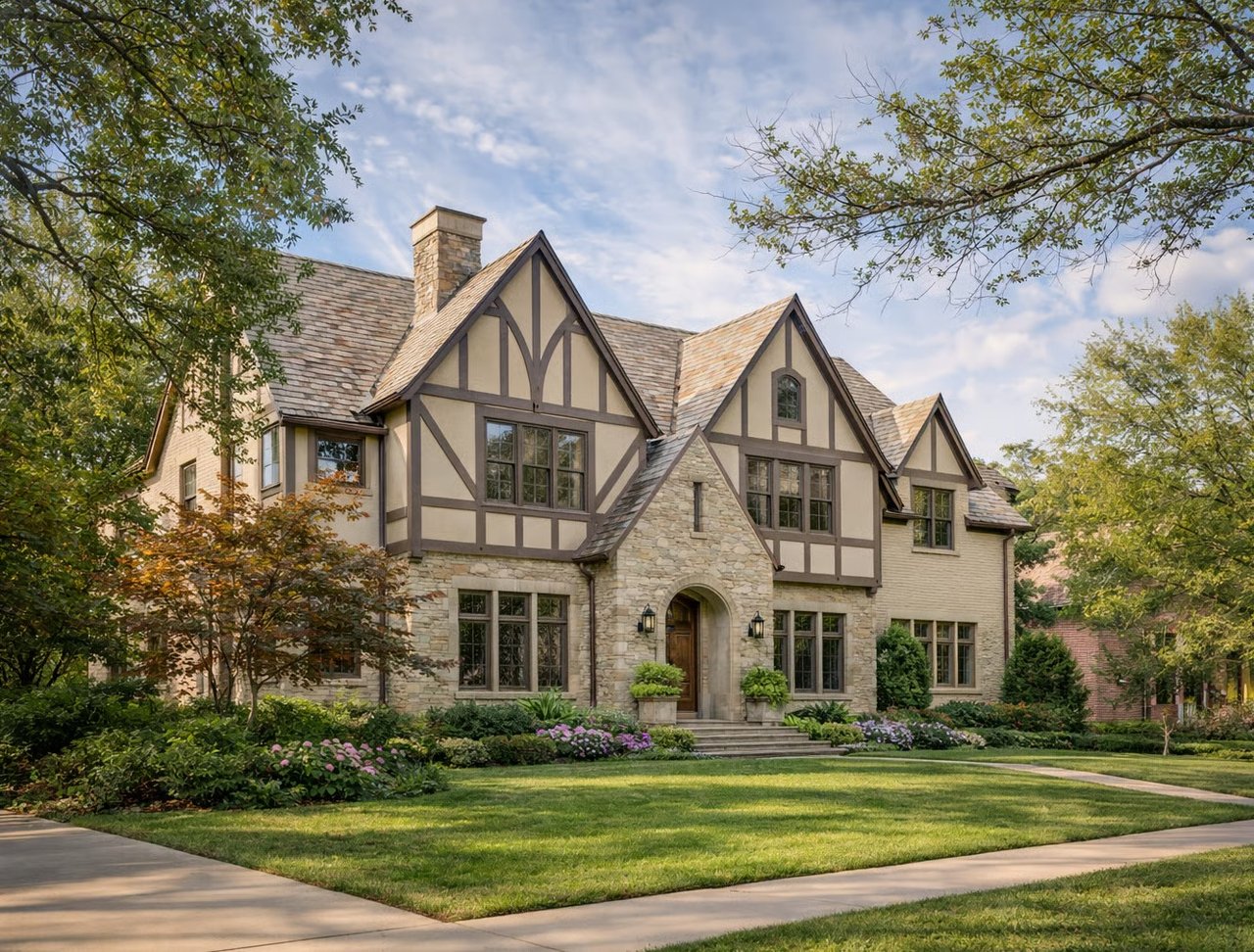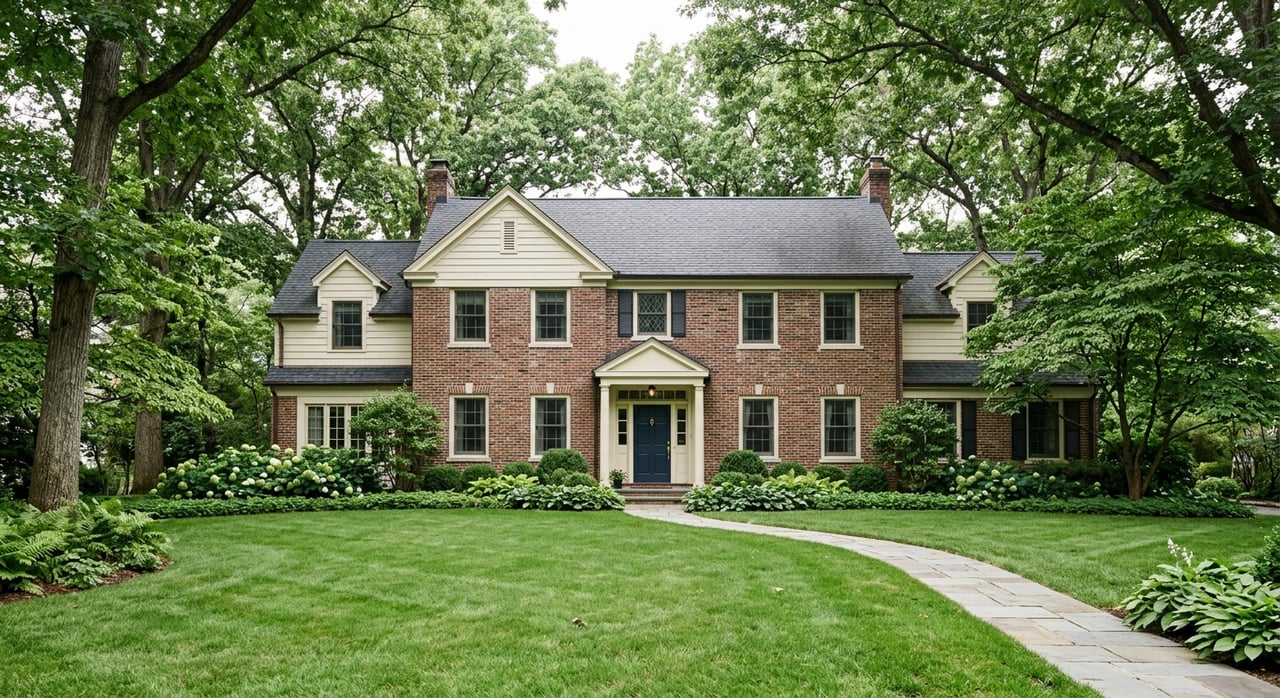
Stand at the corner of any street in Bloomfield Village and try to name a business inside the neighborhood. A coffee shop. A dry cleaner. A gas station. You won't find one. Not because nothing has opened yet, but because nothing was ever supposed to. The neighborhood was drawn that way on purpose in 1924, and a century later the absence still shapes how nearly 4,000 residents spend a Saturday morning.
That's the part the generic guides skip. They'll tell you Bloomfield Village has tree-lined streets and big lots, which is true, and then move on to comparing school ratings. What they miss is the more interesting mechanism underneath: a neighborhood built with zero commercial capacity, which means its entire social life happens somewhere else. For Bloomfield Village, that somewhere else is downtown Birmingham, a short walk over the eastern line.
A Village Built Without a Front Door
Developer Judson Bradway platted Bloomfield Village in 1924 as what its own historical record calls a nonpolitical entity inside Bloomfield Township, covering roughly one square mile between Quarton Road to the north, Maple Road to the south, Lahser Road to the west, and the Birmingham city line to the east. He controlled architectural approval and maintenance standards through 1966. Area residents formed a protective association during World War II to handle fire and police coordination, which incorporated in 1942 and became the Bloomfield Village Association in 1966, the body that still enforces the original building and use restrictions today.
Those restrictions weren't cosmetic. They call for open lawns and screening plantings instead of fences, aiming for what the Association describes as a rural-like setting undisturbed by incompatible structures. Retail was never part of the plan. Nearly 1,000 homes went up inside that footprint, and not one of them sits on a commercial lot. If you want the deed restriction details in full, the Bloomfield Village Association still publishes them, and Kathy Remski's own guide to the deed restrictions walks through what they mean for anyone buying inside the boundary.
The Address Gives It Away
Here's the detail that tells you the founders never expected residents to be self-sufficient. If you live in Bloomfield Village, you technically reside in Bloomfield Township, your kids attend Birmingham Public Schools, and your mail carries a Bloomfield Hills address. Three separate governments touch your daily life and none of them is the neighborhood itself. A subdivision built to be entirely residential doesn't need its own zip code identity or its own commercial tax base. It needs a good next-door neighbor, and Bloomfield Village happens to share its longest border with one of the most walkable downtowns in Oakland County.
Where the Walk Actually Goes
Ask a longtime resident where they take the dog on a Tuesday evening and the answer is rarely a street inside the Village. It's Booth Park, sitting at the southwest corner of Old Woodward Avenue and Harmon Street, just north of a branch of the Rouge River. The park was once the site of a turn-of-the-century interurban rail line before the Booth family bought the land and the Cranbrook Foundation eventually donated it to the city. Its 2007 redesign came almost entirely from the community itself: residents and business owners raised more than $170,000 in private donations, and volunteers built the playscape structures in a single week. Birmingham-based Michael J. Dul & Associates designed the result, which won a 2009 merit award from the Michigan chapter of the American Society of Landscape Architects.
What makes Booth Park function as Bloomfield Village's real front porch is what happens at its edges. A trail connects directly into the Rouge River Trail system, a groomed path running roughly two miles along the river that stays usable through the warmer months for walking, jogging, and easy cycling. Follow it far enough and it links to Quarton Lake, a former mill pond created when early settlers dammed the Rouge to power a sawmill, and from there to Linden Park for a longer loop through quiet residential streets. It's the kind of route families run after school pickup, an easy half hour that ends with kids counting ducks rather than checking a fitness app.
In winter, the same ground does different work. Booth Park's turf hill turns into the neighborhood's sledding spot, and the shaded stretches along Quarton Lake get icy enough that anyone doing the loop in January should slow down and wear real boots, not just sneakers.
What's Changing at the Trailhead This Fall
If you've used the Booth Park trailhead this year, you may have noticed it mid-transformation. The City of Birmingham authorized design and engineering work for a Booth Park Entry Plaza and Trail Improvement project, with Grissim Metz Andriese Associates handling the architecture. The plan calls for an ADA-compliant entry plaza with seating and gathering space, new trail entry signage at five points throughout the system, a restroom facility, native garden plantings, accessible boardwalks and viewing areas, and a new pedestrian bridge planned south of Maple Road. According to the city's own Parks and Recreation bond page, construction was anticipated to begin this past spring, pending final approvals.
For a Bloomfield Village resident who treats this trailhead as a daily route, that's worth tracking heading into fall. Detours around active construction zones are a reasonable expectation this season, and the payoff, once finished, is a more accessible connection point between the Village's eastern edge and the rest of the Rouge River corridor. This is not a story you'll find on a national real estate portal. It's the kind of thing you only know if you actually walk the trail.
The Calendar Worth Keeping Through December
The rest of the neighborhood's social calendar runs through downtown Birmingham too, and a few dates are worth having on hand before the season shifts:
- Birmingham Farmers Market, every Sunday through October 25, 2026, 9 a.m. to 2 p.m., at Public Parking Lot #6 on North Old Woodward Avenue. Live music plays every week, and the second Sunday of each month brings free fitness sessions in or near the market space, past examples include yoga and classes with Gazelle Sports. The season wraps with a harvest-themed close on October 25.
- Booth Park outdoor movie nights, pre-show entertainment starting at 6:30 p.m. and the film around 7:30 p.m., with a screening confirmed for September 4, 2026. Bring a blanket rather than a chair if you want to sit close.
- Winter Markt, arriving in early December in and around Shain Park, a German-themed holiday market with local vendors, European food, thousands of lights, ice sculptures, and carriage rides.
None of this happens inside Bloomfield Village's own borders. All of it is close enough to reach on foot, which is precisely the arrangement Judson Bradway's original plat assumed a century ago.
The Trade That Still Holds Up
A neighborhood with no commercial lots sounds like a limitation until you notice what it actually buys residents: streets with no drive-through traffic, no delivery trucks, no storefront signage competing with the tree canopy, and a five to ten minute walk to a downtown that has all of that instead. Bloomfield Village never needed its own Main Street because it borrowed one from a neighbor with a much better claim to the title. That's not a compromise built into the address. It's the design working exactly as intended in 1924, still holding a century later.
If you're weighing what a street in Bloomfield Village is actually worth, or want a closer look at the deed restrictions that keep the neighborhood this way, Kathy Remski knows this stretch of Oakland County block by block. Let's Connect and talk through what you're seeing.